

In the footsteps of Woody Allen in San Sebastián
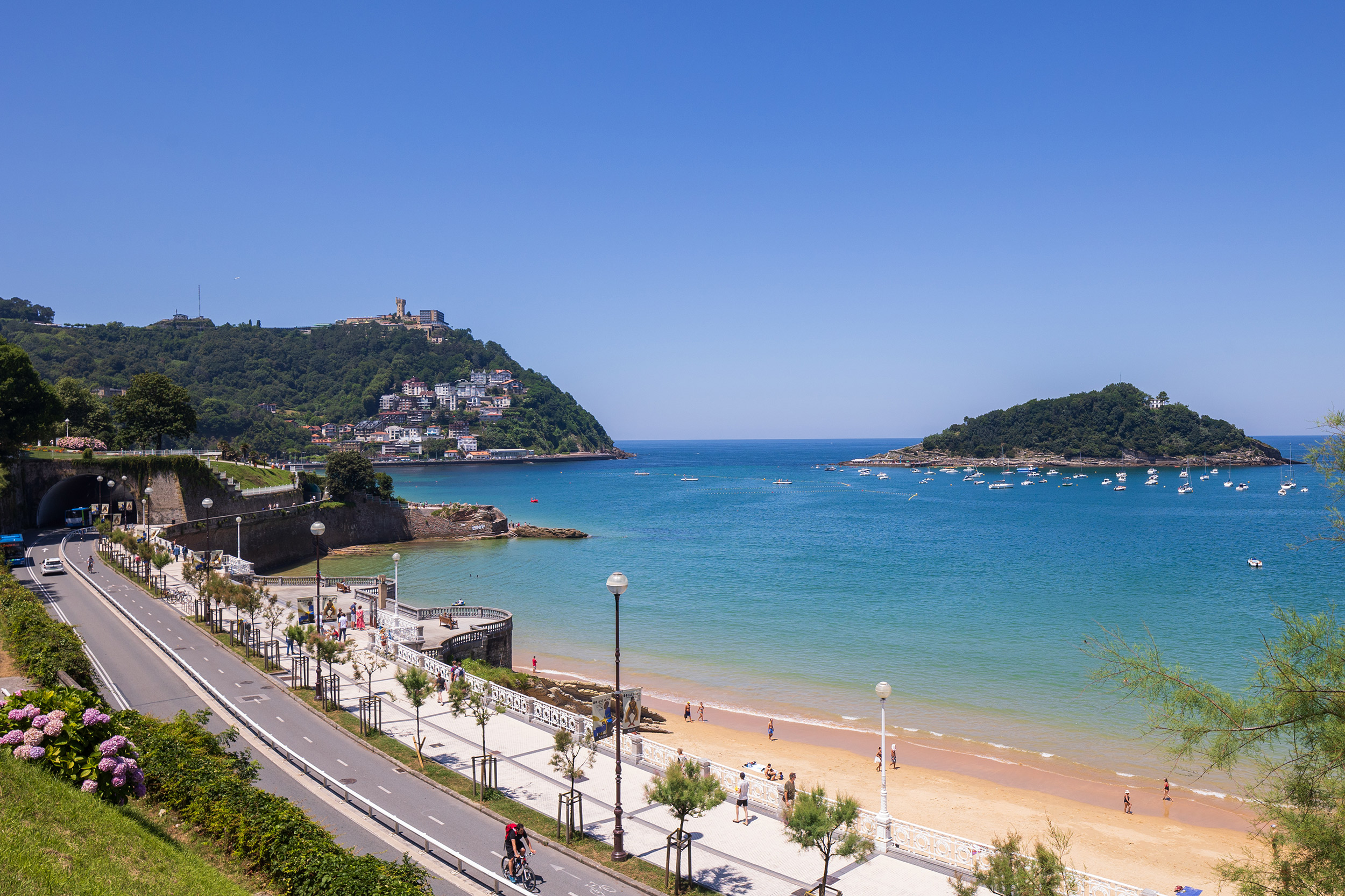
Traditional yet cosmopolitan, the city of San Sebastián draws people there with its iconic beach —considered the pearl of the Bay of Biscay—, its historic Old Town, and its elegant buildings of the Belle Époque, which are witnesses of a heyday that transformed the city into a top tourist destination. In the mid-19th century, San Sebastián experienced an architectural boom, driven by Queen María Cristina, who, after choosing the city as her summer destination in 1893, was behind the construction of majestic buildings in the French style.
This architectural legacy, along with the contemporary buildings that have continued to enrich the city, have given San Sebastián its particular romantic yet cutting-edge feel. It is not surprising that directors of the ilk of Woody Allen have chosen its streets and landscapes as the setting for films such as Rifkin’s Festival. This film route will take you to visit 10 places that were locations for the film, where you can also relive the atmosphere of the Belle Époque that continues to pervade every corner of the city.
A movie-worthy route
1. KURSAAL
The route begins at the Kursaal Centre, a key venue of the San Sebastián Festival both in the film and in reality. The production team recreated the festival’s atmosphere in great detail in this cutting-edge building, designed by Rafael Moneo and which was awarded the Miles van der Rohe Prize in 2001. After admiring its striking architecture, I suggest you make your way to the Mirador de Ulia restaurant, another of the scenes of the film where you can enjoy spectacular views of the city.
2. PLAZA OKENDO – VICTORIA EUGENIA THEATRE
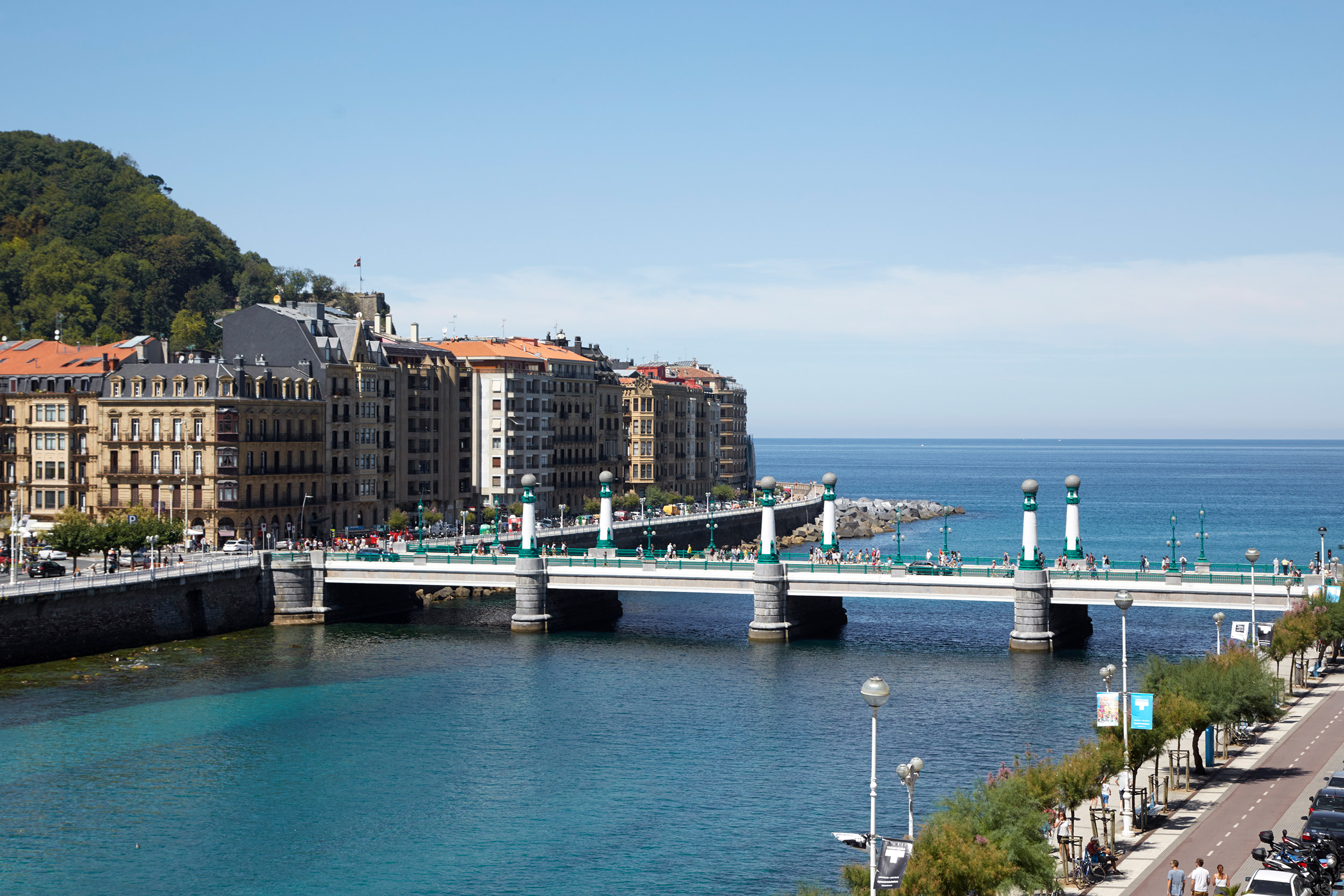
After crossing the Zurriola Bridge with its Art Deco street lamps, you will come to Plaza Okendo. The square is home to the Victoria Eugenia Theatre which immediately whisks you back to the Belle Époque. Since 1912, this building in the neo-Plateresque and Renaissance style has been at the heart of the city’s culture, hosting world premieres such as Hitchcock’s North by Northwest. The film Rifkin’s Festival even includes a nod to the cameos of the British director.
3. PLAZA GIPUZKOA
Behind the Victoria Eugenia Theatre is the Plaza Gipuzkoa, the square where Wallace Shawn —who brought Mort Rifkin to life— strolled through the gardens, watching the ducks and swans on the pond. This is an ideal spot to take a break at one of its cafés and enjoy the peaceful setting. If you go, look out for the temple-shaped weather station, a large table indicating times, and a large flower clock.
4. PLAZA BILBAO – MARÍA CRISTINA bridge – ÁRBOL DE GERNIKA promenade
Then make your way to Plaza Bilbao, the square that is home to the landmark Donosti bookshop, a modernist gem with beautiful storefronts, which was filmed in Rifkin’s Festival and in the “Patria” and “La Línea Invisible” TV series. Not far away is the María Cristina Bridge, which Elena Anaya —playing Dr. Jo Rojas— and Wallace Shawn crossed in a red convertible. Opened in 1905, it is famous for its four huge obelisks, inspired by the Alexandre III Bridge in Paris. Crossing it will take you to the Árbol de Gernika Promenade, where the characters in the film stop to have a coffee at the Botanika sidewalk café.
5. PLAZA ZULOAGA – SAN TELMO MUSEUM – SAN VICENTE CHURCH
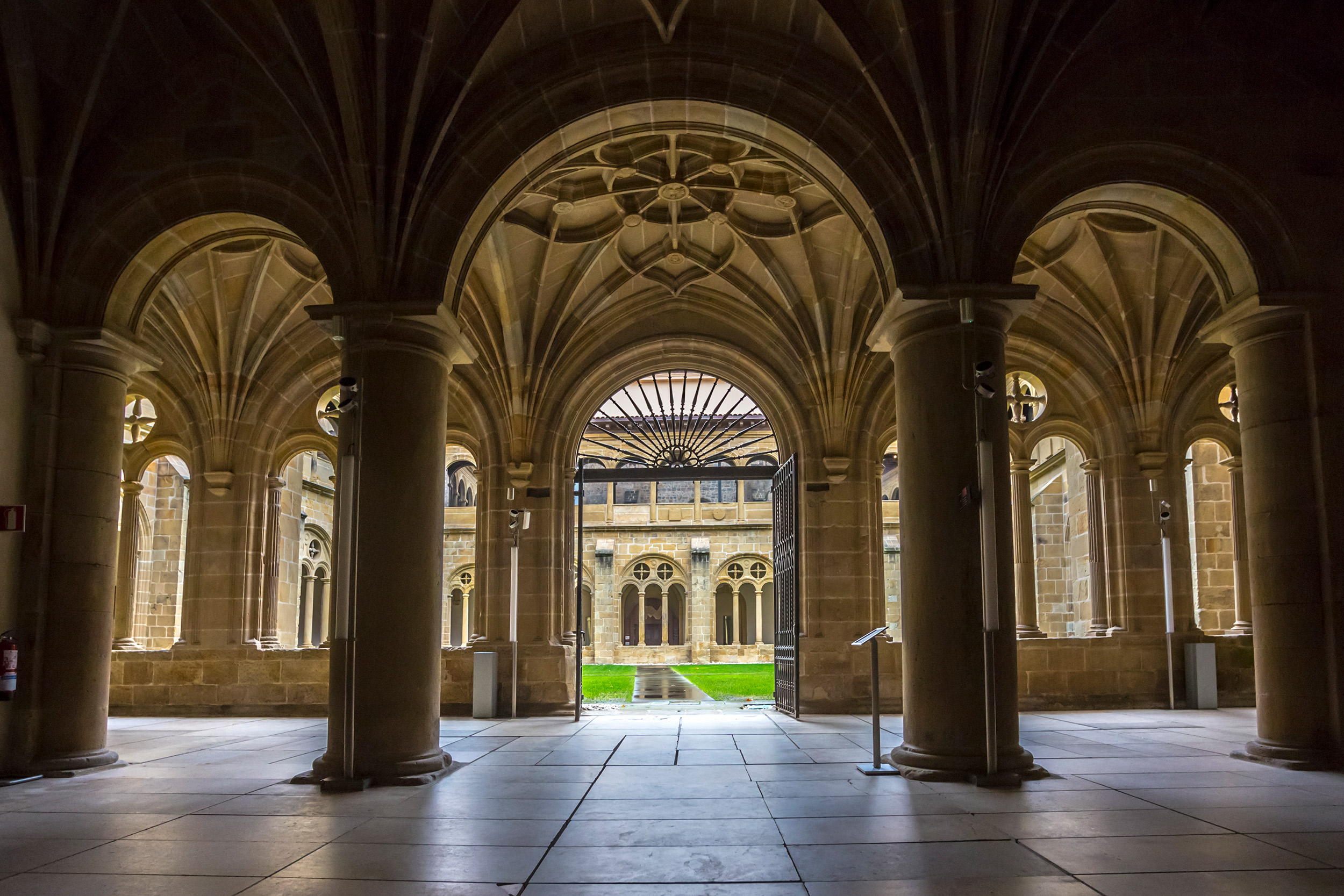
When you reach the Old Town, you will come to the San Telmo Museu, where one of the festival’s parties in the film is held in Plaza Zuloaga Square. The museum, a former convent dating back to the 16th century, is worth visiting for its mix of Gothic and Renaissance styles. San Vicente Church is just in front and is another stop on the film route; it is famous for its striking altarpiece —the work of Ambrosio Bengoechea— and the Piety sculpture —by Jorge Oteiza—.
6. BOULEVARD MUSIC STAND – CITY HALL
The film’s leading character gets lost in his thoughts at the music stand on the Boulevard, which separates the Old Town from the city centre. Along with this legacy from the 19th century, special mention should be made of the city hall —built as the Gran Casino in 1887— and the Alderdi Eder gardens with their colourful flowers and the iconic merry-go-round, a perfect spot to stroll through on La Concha Bay.
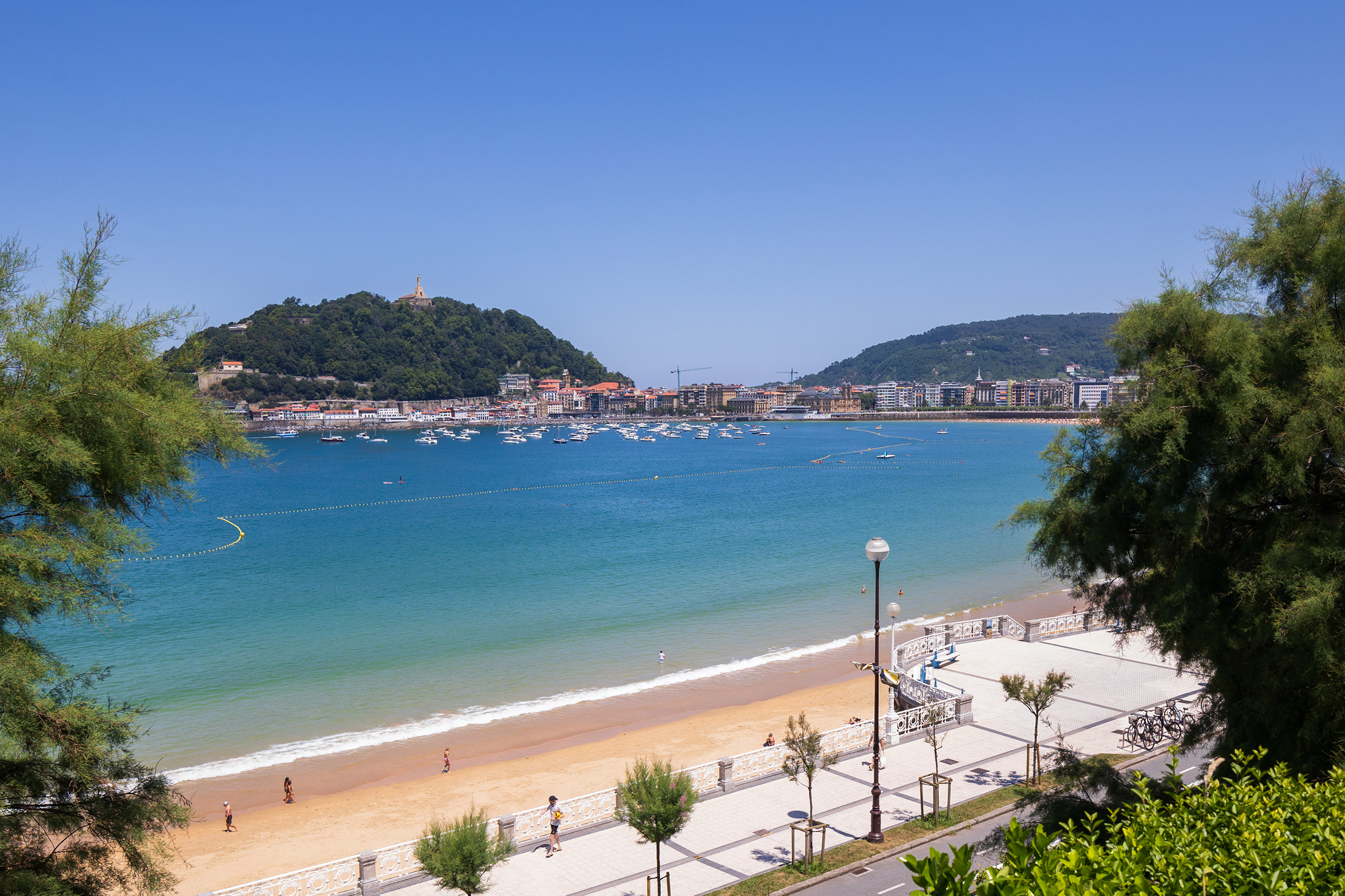
7. LA CONCHA PROMENADE – THE RAILING
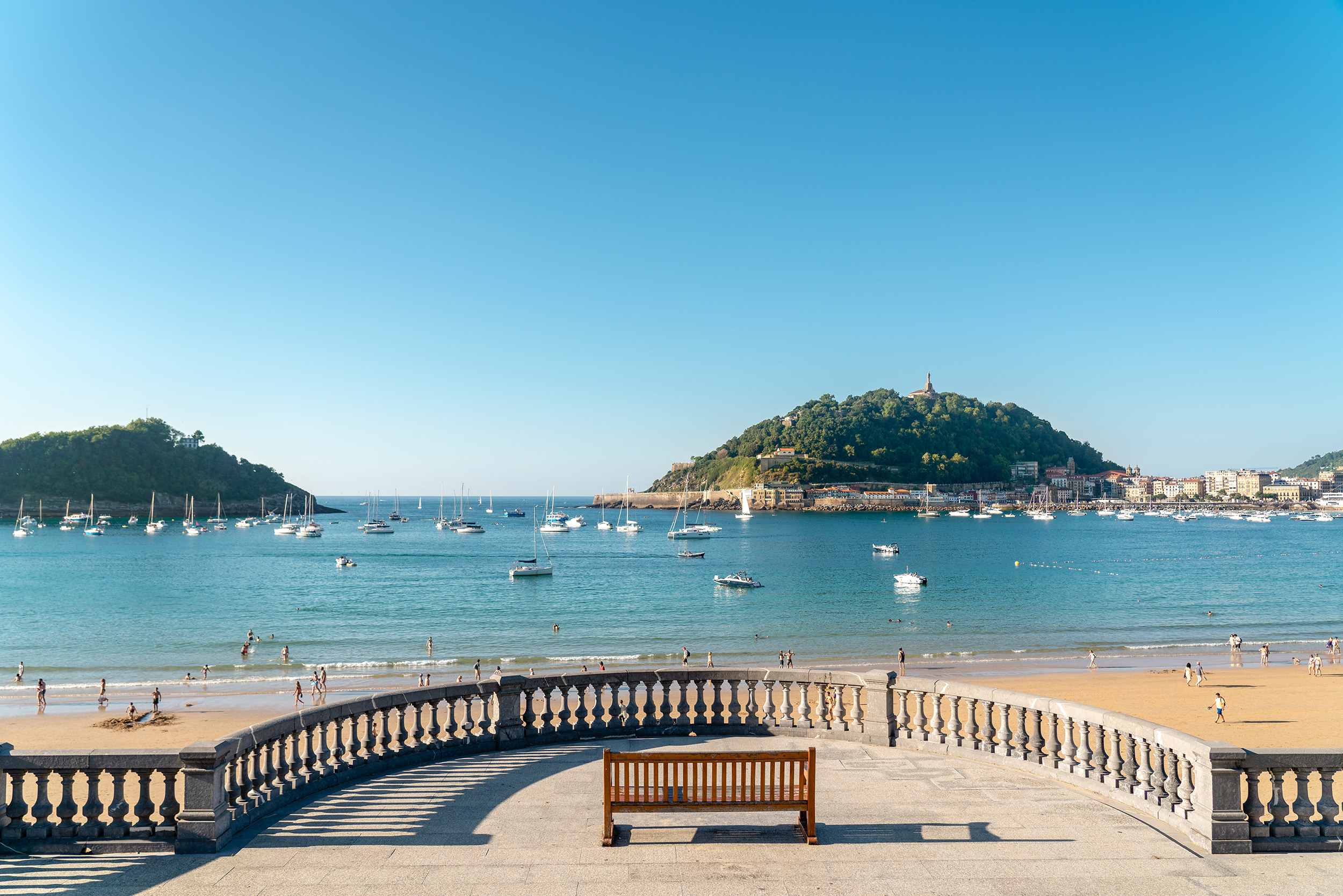
La Concha promenade is one of the must-sees of San Sebastián. This setting, where Gina Gershon and Louis Garrel enjoyed a romantic walk in the film, is where you can enjoy one of the city’s most iconic views. Its famous railing, built by the architect Juan Rafael Alday in 1910, continues to be one of the city’s best-known symbols. Incidentally, the railing cost around 5,700 pesetas —roughly €34— and was opened by King Alfonso XIII in 1916.
8. MIRAMAR PALACE
As you continue to walk towards Ondarreta, you will come to Miramar Palace, another of the city’s gems. In Rifkin’s Festival, a psychiatrist’s office was in this palace, and scenes inspired by Citizen Kane were recreated. Its gardens are also a must-see, where you can enjoy the peaceful setting and views over the bay.
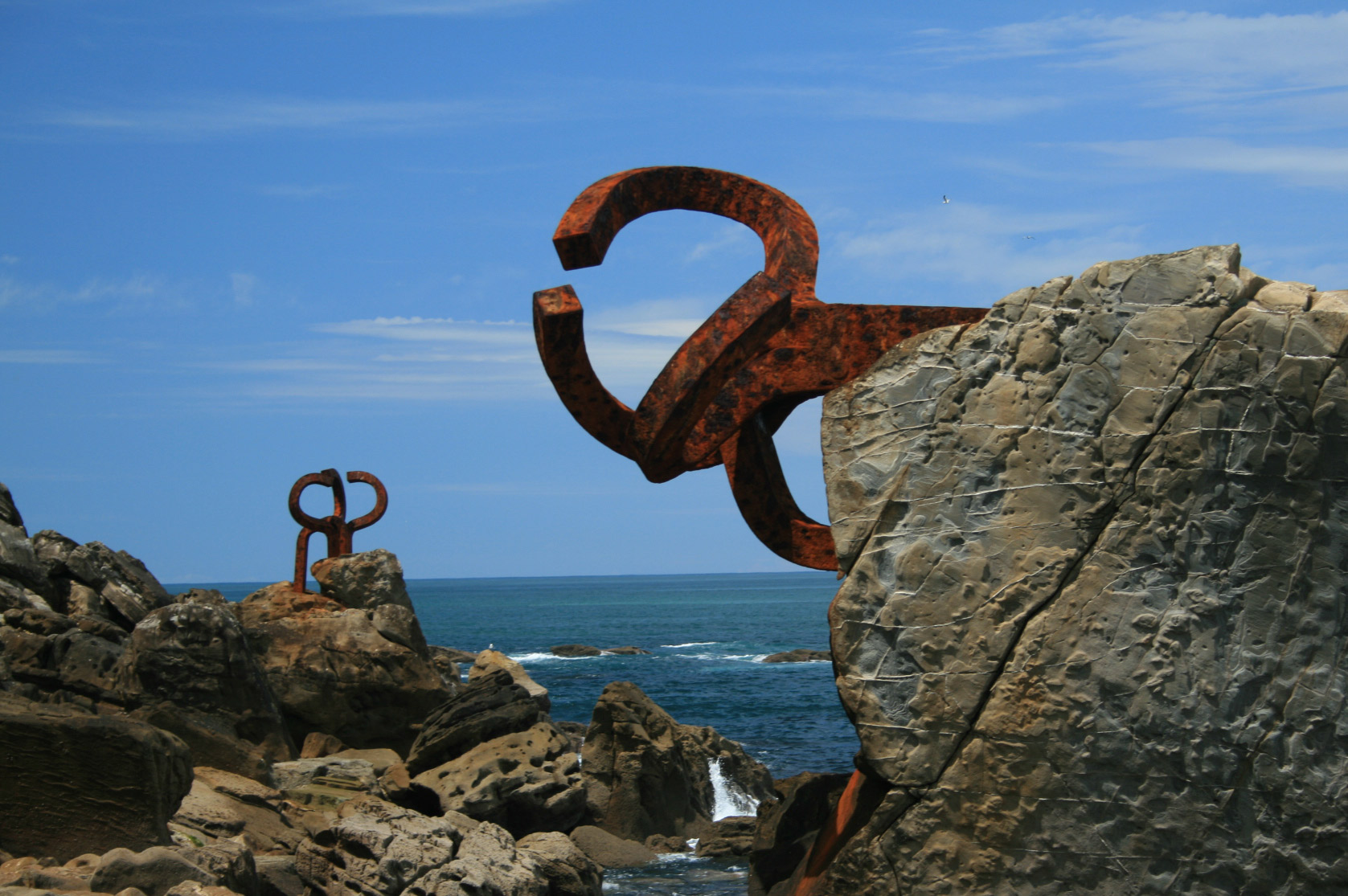
9. PEINE DEL VIENTO
Continue to Peine del Viento —The Comb of the Wind in English—, one of the celebrated sculptures of Eduardo Chillida, produced in 1976. In the film, Wallace Shawn and Elena Anaya also stop here. If you want a unique experience, you should come here where the sea is rough. The waves spill over and splash against the sculpture, reminding us of the unstoppable force of nature and the powerful relationship and respect between the sea and art.
10. AIETE palace
Wood Allen’s San Sebastián route ends at Aiete Palace, which in the film is in black and white to reflect the dreams of the lead character, particularly those of his childhood. This palace, which was the residence of members of royalty, is now the House of Peace and Human Rights. Once three, you should spend time exploring its park with over 100 species of plants and trees. Will you find the huge redwood, the tallest and largest tree in San Sebastián?
If this route has roused your interest, you should solve the city’s mysteries on the San Sebastián Tourist Office’s scavenger hunt, as you work out clues and learn more about its culture, language, and traditions.